
Beyond the Fund Cycle: The Advantage of Permanent Capital in Industrial Scaling
As I assess the fiscal landscape of 2026, it is increasingly evident that the era of permissive capital and low-interest-rate arbitrage has concluded, giving way to a more rigorous period that rewards operational resilience over financial engineering. For those of us entrusted with the stewardship of significant industrial assets, the most pressing strategic question is no longer how to achieve a rapid liquidity event, but how to construct an institution capable of durable, long-term scaling. In this modernized perspective, I wish to address a fundamental structural misalignment that continues to plague the traditional private equity model: the arbitrary constraint of the ten-year fund cycle and its failure to support the multi-generational requirements of heavy industrial scaling.
At Durandisse Industries, we have deliberately abandoned the "buy-to-sell" paradigm in favor of a "permanent capital" architecture. This is not merely a preference for longer holding periods; it is a fundamental shift in the philosophy of ownership. We view our portfolio companies not as assets to be optimized for a near-term exit, but as foundational institutions whose growth requires a time horizon measured in decades, not quarters.
The Capex Clock: Why Industrial Scaling Defies Transaction Timetables
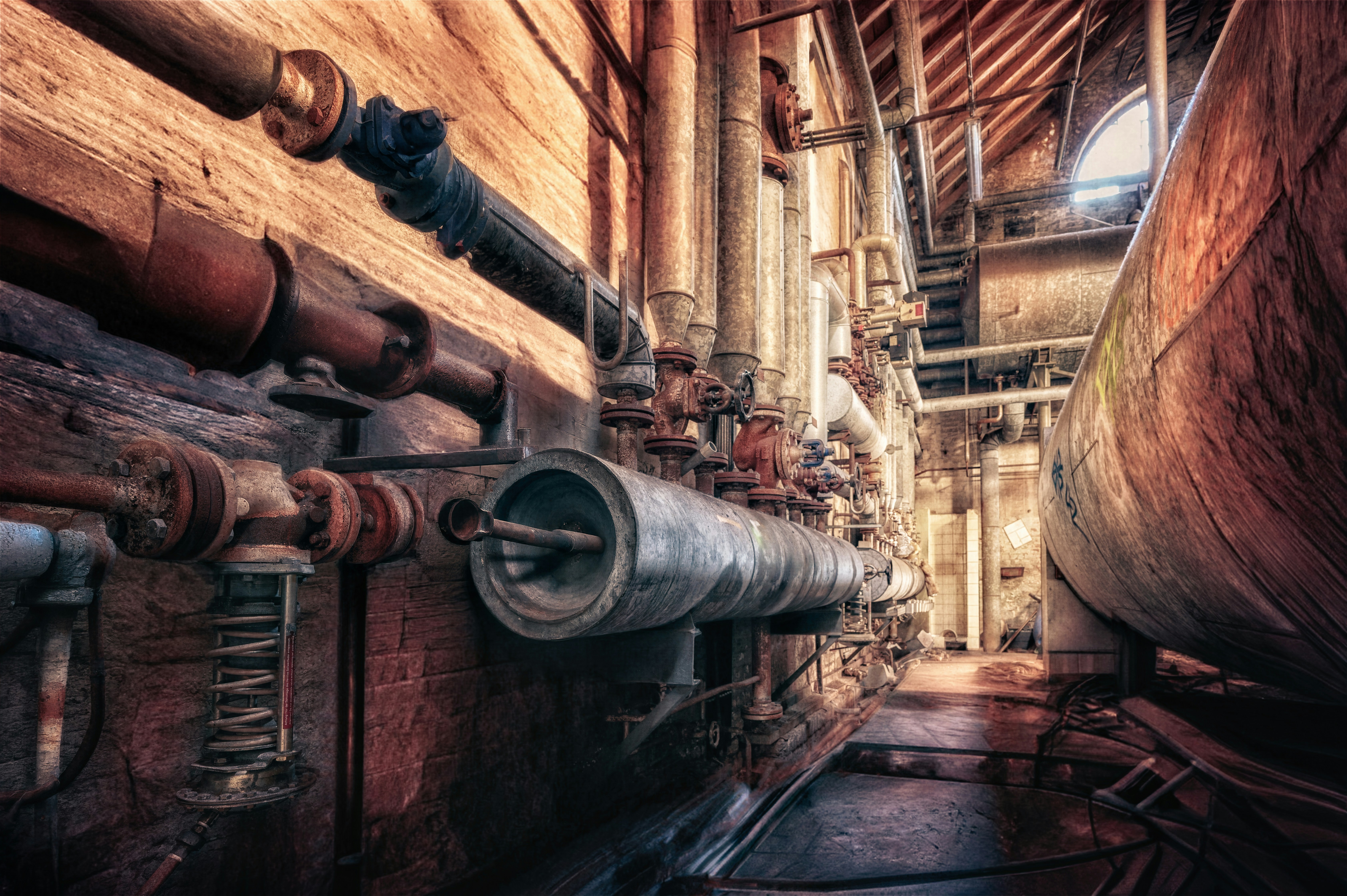
In heavy industry, the governing calendar is not the fund document but the capital expenditure program. A serious scaling agenda begins with plant design, utility reinforcement, equipment specification, supplier qualification, and commissioning discipline, all of which consume time before incremental throughput is visible in reported earnings. In 2026, as input volatility, equipment lead times, and compliance requirements remain elevated, the distance between authorizing investment and harvesting normalized returns has widened rather than narrowed.
The practical consequence is that industrial leadership teams must allocate capital across sequential waves of expenditure, each with its own operational dependencies. A first tranche may be absorbed by site preparation, civil works, substations, and environmental controls. A second tranche may fund automation cells, material handling systems, fleet modernization, or warehouse architecture. A third tranche often supports debottlenecking, workforce training, maintenance digitization, and quality systems, which are less visible to outside observers yet indispensable to stable output. When ownership is organized around accelerated realization, these interlocking stages are too often compressed, deferred, or partially executed, producing subscale assets that carry the burden of full cost without the benefit of full performance.
Multi-Year Payback as a Strategic Discipline
The central industrial question is therefore not whether a project is immediately accretive, but whether its payback profile is consistent with durable cash generation across a full operating cycle. Many of the most consequential initiatives in manufacturing, logistics, and industrial services do not repay capital in eighteen months or even three years. They repay over seven, ten, or fifteen years, particularly when the investment thesis depends on utilization ramp, maintenance reliability, procurement leverage, and customer retention compounding together over time.
This is especially evident in networked operating systems such as precision logistics frameworks, integrated warehouse modernization, or transport fleet renewal. The initial outlay is front-loaded, but the return stream matures only after routing logic improves, asset downtime declines, customs coordination stabilizes, and service quality begins to command repeat volume. Conventional capital structures often misread this profile as delay. We regard it as evidence of industrial seriousness. A long payback period is not a flaw when the underlying asset base becomes more defensible, more efficient, and more difficult for competitors to replicate.

At Durandisse Industries, our analytical emphasis is directed toward the mechanics of scaling after deployment, not merely the moment of deployment itself. We examine how additional capacity is absorbed, how fixed-cost intensity declines as utilization rises, how maintenance intervals evolve under heavier loads, and how earnings quality improves once the asset begins operating through a complete market cycle. This is why we favor industrial programs that may appear demanding in the early years yet become structurally superior in the later years, when simpler models have already exhausted their easy gains.
The Architecture of Permanence: The Durandisse Advantage
Our advantage is expressed most clearly in the way we align capital duration with asset duration. In industrial environments, steel, power systems, fabrication lines, loading infrastructure, and digital control layers are not temporary instruments; they are long-lived productive foundations. The ownership model must therefore be capable of tolerating delayed payback in exchange for stronger terminal economics. In the 2026 fiscal landscape, this architecture provides several critical advantages:
- Sequential Capex Endurance: We can support phased investment programs in which returns emerge through commissioning, ramp-up, optimization, and mature utilization rather than demanding immediate financial compression of the timetable.
- Payback Period Integrity: We can underwrite ten-to-fifteen-year recovery horizons when the project materially strengthens throughput, reliability, and pricing durability across the enterprise.
- Operational Continuity: Management teams can execute shutdown schedules, retrofits, systems integration, and training programs without distorting decisions to satisfy an externally imposed monetization deadline.
- Compounding Asset Quality: Because we remain in place through the full maturation of the asset, we capture the benefits of learning curves, maintenance excellence, network density, and customer trust that accumulate only after the initial Capex cycle has been absorbed.
Operational Excellence as a Perpetual Mandate
A common critique of long-duration ownership is that the absence of a forced transaction reduces managerial urgency. We reject that assumption because industrial urgency should be measured not by proximity to a sale, but by the quality, pace, and discipline with which productive capacity is converted into reliable returns on invested capital. Our governance model is therefore designed to intensify operational accountability precisely where industrial systems are most vulnerable: commissioning execution, maintenance planning, procurement synchronization, throughput realization, and post-investment performance measurement.
Through our subsidiary, Durandisse International Transport, we have implemented real-time shipment tracking and customs coordination systems that required significant long-term investment. Yet the relevance of such investment cannot be understood through a narrow earnings lens alone. The more important analytical question is how these systems alter the operating curve over several years: reducing border friction, improving asset turns, increasing schedule integrity, strengthening customer retention, and creating a more dependable base from which future Capex can be deployed with lower execution risk.
In practice, operational excellence in industrial scaling is a multi-stage discipline. The first stage is capital placement, in which funds are committed to assets and systems that expand strategic capacity. The second stage is ramp discipline, in which throughput, labor readiness, maintenance cadence, and supplier reliability are stabilized. The third stage is optimization, in which network density, procurement leverage, route rationalization, and data visibility begin to raise margins without degrading service resilience. The fourth stage is compounding, in which the enterprise benefits from lower unit costs, stronger competitive positioning, and a more credible platform for subsequent expansion. Most transaction-oriented models focus heavily on the first stage and seek to monetize before the fourth has fully emerged. Our model is built to remain present through the entire sequence.
This is why we regard operational support as a perpetual mandate rather than a temporary intervention. We do not seek to manufacture the appearance of readiness for an exit process. We seek to build industrial institutions whose cash conversion, asset reliability, and scaling capacity improve across complete business cycles. In the 2026 market, where volatility punishes shallow preparation and rewards system depth, that distinction is not rhetorical. It is the difference between a business that looks optimized for a quarter and one that is engineered to endure for a generation.
The Chairman’s Perspective: A Comparative Summary
For the business owner, founder, or institutional board evaluating their path forward in 2026, the relevant distinction is not merely between short-term capital and long-term capital, but between a model organized around transaction timing and a model organized around industrial maturation.
| Strategic Dimension | Transaction-Timed Ownership | Durandisse Industries |
|---|---|---|
| Capital Deployment Logic | Front-loaded with pressure for rapid monetization | Sequenced around operational absorption and system maturity |
| Payback Tolerance | Prefers short-duration recovery | Supports multi-year and decade-scale payback periods |
| Capex Philosophy | Selective investment shaped by exit visibility | Full-cycle investment shaped by asset durability and throughput potential |
| Performance Measurement | Emphasis on interim valuation and IRR optics | Emphasis on ROIC, cash generation quality, and utilization improvement |
| Ramp-Up Management | Often compressed by fund timelines | Managed through commissioning, optimization, and mature run-rate realization |
| Strategic Outcome | Partial value capture before full compounding | Full participation in the tail of industrial value creation |
Conclusion: Organizing Around Potential, Not Exits
The global industrial landscape of 2026 is no place for the impatient. Industrial capacity is built through long procurement calendars, staggered construction schedules, commissioning complexity, utilization ramp-up, and disciplined reinvestment across multiple operating years. In such an environment, capital that demands premature realization does not merely inconvenience the enterprise; it distorts the industrial logic upon which enduring competitiveness depends.
I do not contend that every asset requires the same duration profile, but I am convinced that ambitious industrial scaling cannot be responsibly governed by a timetable detached from Capex reality and payback mechanics. At Durandisse Industries, we have organized our model around the full life cycle of productive investment: authorization, deployment, stabilization, optimization, and compounding. That is the discipline required to transform expenditure into institutional strength. We do not organize around exits; we organize around the complete maturation of industrial potential.
This comprehensive thought-leadership article was authored by Carichcard Durandisse, Chairman and Chief Executive Officer of Durandisse Industries. For inquiries regarding our permanent capital methodology or strategic portfolio acquisitions, please contact our corporate communications desk at content@durandisse.com.